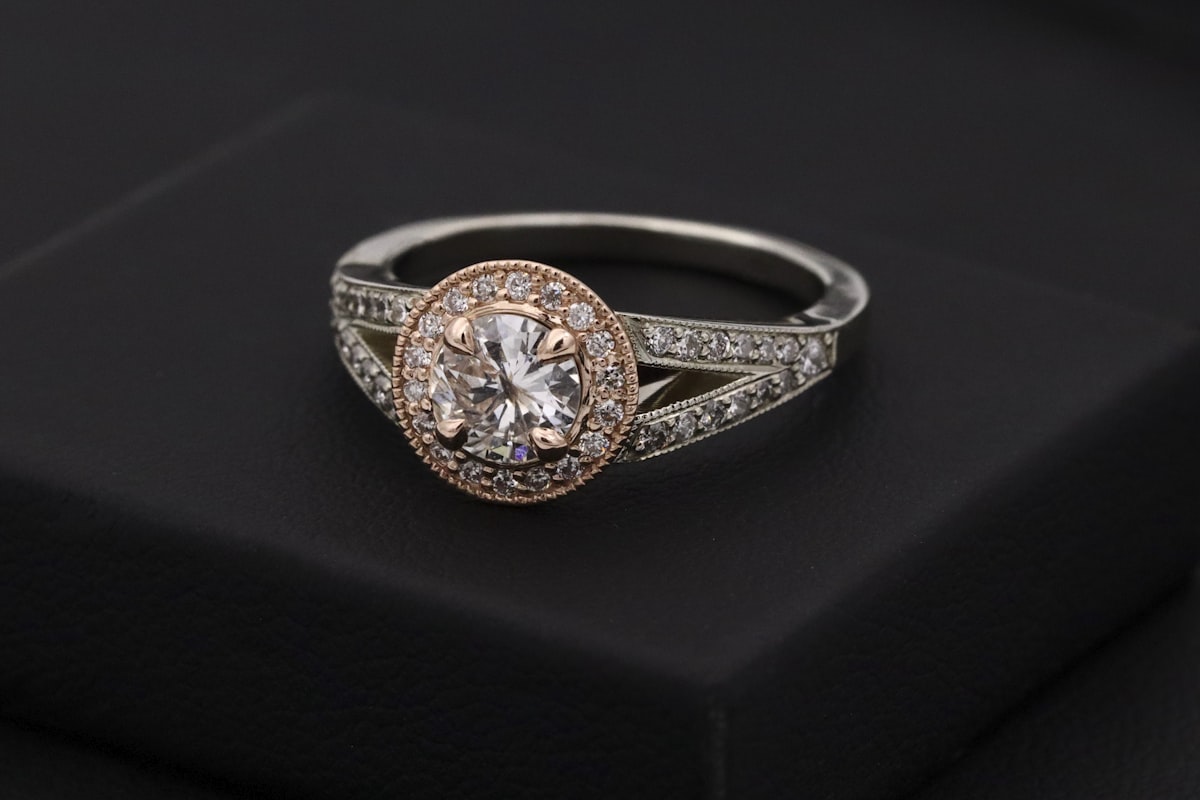
The engagement ring is the spectacle. It's the diamond that gets photographed, the piece that triggers oohs and ahhs when you show it to friends. But the wedding band? That's the ring you actually live with. You'll wear it every day for decades. It needs to feel right on your finger, work with your life, and endure everything you put it through.
I've helped countless couples navigate this decision, and I find that the wedding band conversation is often more interesting than the engagement ring conversation. There's less pressure to make a statement and more focus on what actually works. That freedom can be surprisingly helpful when you're choosing.
The Matching Question
One of the first decisions couples face: should the wedding bands match? The traditional answer is yes, but "traditional" has loosened considerably.
Matching bands create a unified look and symbolic connection. Many couples choose this approach for its elegance and meaning—two different people united with rings that share a design language. Matching is particularly common when both partners want similar styles and metals.
Non-matching or complementary bands reflect the reality that the two of you are different people with different tastes. One partner might prefer a simple gold band while the other wants something with more presence. There's nothing less romantic about this—it's honest. Many couples shop for their own bands and simply coordinate enough that they look intentional together.
The one situation where matching matters more: if you're having custom work done. A jeweler can create a true matching set more easily than trying to coordinate two separate designs from different sources.
Metal Choices
The metal you choose affects everything: appearance, durability, maintenance, and price. Here's the rundown.
Yellow Gold
Yellow gold is the classic choice for wedding bands and has experienced a significant resurgence. Its warmth complements most skin tones and pairs naturally with vintage and traditional aesthetics.
For wedding bands, I typically recommend 14K gold. It's durable enough for everyday wear, has a beautiful color, and is more affordable than 18K. 18K has a richer color but scratches more easily. 10K has a paler appearance that some find less appealing, though it's the most durable option.
Yellow gold requires minimal maintenance. It doesn't need replating like white gold, though it will develop a patina over time that many people appreciate. When it does scratch, the gold color matches, so repairs are nearly invisible.
White Gold
White gold has been the most popular choice for wedding bands for the past few decades. It offers the look of platinum at a lower price point and pairs well with diamond engagement rings.
The key thing to know: white gold is typically rhodium-plated to achieve its bright, white appearance. That plating wears off over time—how quickly depends on wear patterns and body chemistry. When it wears, you'll see the slightly warm gray of the underlying white gold alloy. Plan on having white gold rings replated every few years if you want to maintain that bright look.
Some people develop skin reactions to the nickel content in white gold. If you have sensitive skin or have had reactions to costume jewelry, consider palladium-based white gold (hypoallergenic) or platinum instead.
Platinum
Platinum is the premium choice for wedding bands. It's naturally white, doesn't rhodium-plate, develops a beautiful patina over time, and is extremely durable. It's also significantly heavier than gold—a platinum ring feels substantial on the finger.
The main drawbacks are price (typically 2-3x the cost of equivalent gold) and the fact that platinum scratches show more because they're the same color as the metal (unlike gold, where scratches reveal more gold). Many people prefer platinum's evolving patina; if you prefer to maintain a bright polish, factor in periodic polishing costs.
Rose Gold
Rose gold has become increasingly popular and represents a departure from traditional choices. Its warmth is distinctive, and it pairs particularly well with vintage-inspired settings and certain skin tones.
The copper content that gives rose gold its pink color makes it slightly more prone to tarnishing and can cause skin reactions in those with copper allergies. It's durable enough for everyday wear, but if you have sensitive skin, proceed with caution.
Alternative Metals
Some couples choose alternative metals: palladium, titanium, tungsten, cobalt chrome. These are generally less expensive and can be more scratch-resistant than precious metals. They're popular for fashion bands and men's rings in particular.
My caution: these metals cannot be sized. If your ring size changes (and it can, for various reasons), a ring made in these metals typically cannot be adjusted. For a wedding band you'll wear every day for decades, this is a significant limitation. I generally recommend precious metals for primary wedding bands and alternative metals for fashion or backup rings.
Width and Profile
Band width is measured in millimeters and dramatically affects both appearance and comfort. There's no universally correct width—it depends on hand size, finger proportions, and personal preference.
Width Guidelines
- 2-3mm: Delicate, feminine, works well for small hands or slender fingers
- 4-6mm: The most common range for women's wedding bands—substantial without being heavy
- 6-8mm: Standard for men's bands; also works for women who want a bolder look
- 8mm+: chunky presence, often preferred for men's bands and fashion rings
The engagement ring's width should generally complement the wedding band's width. A very thin engagement ring with an extremely wide band can look unbalanced. Similarly, a substantial engagement ring needs a band that can hold its own.
Profile Options
The band profile is the cross-sectional shape of the ring:
- Comfort fit: Rounded interior that slides on easily and feels comfortable for long-term wear. Most popular choice.
- Standard fit: Flat interior. Less expensive but can be less comfortable, especially for wider bands.
- Low dome: Slightly rounded exterior, minimal curve
- High dome: More pronounced rounded exterior, more substantial look
For everyday comfort, comfort fit is usually the best choice. The extra cost is justified by how much more pleasant the ring feels.
Finishes
The finish determines how the ring looks and how it ages. Different finishes have different characters and maintenance requirements.
Polished
The standard high-shine finish. It reflects light and looks formal. It shows scratches most readily but can be re-polished to like-new condition when needed. Most wedding bands start with a polished finish.
Matte or Satin
A soft, non-reflective finish that hides scratches better than polished. The look is more casual and contemporary. Over time, matte finishes may develop a slightly inconsistent appearance as some areas polish up from wear.
Brushed or Sandblasted
Textured finishes that hide wear well. Brushed has fine parallel lines; sandblasted has a more uniform granular appearance. Both add visual interest and are practical for people who are hard on jewelry.
Hammered
A texture created by dimpling the metal surface. It hides scratches and wear exceptionally well and has an organic, artisanal quality. The texture is created by hand, so no two hammered rings are exactly alike.
Combinations
Many wedding bands combine finishes—a polished center with matte sides, for instance, or a hammered center with polished edges. These combinations add visual interest and can be practical, using polished areas for engraving while keeping the visible center textured.
Should Your Band Match Your Engagement Ring?
Matching metal between engagement ring and wedding band is standard but not required. Some considerations:
- Differing metals: Yellow gold engagement ring with white gold band creates visual contrast that some find interesting. However, wearing different metals against each other accelerates wear on both—something to consider.
- Contoured bands: Some engagement ring settings require contoured wedding bands that curve to fit the setting. These can only be made in the same metal as the engagement ring.
- Solitaire settings: With simple solitaire engagement rings, you have more flexibility in band choice. Many people choose a different metal for contrast.
If you want different metals, consider the practical implications. Wearing yellow and white gold together will cause both to wear faster than if they were paired with themselves. This might not matter over decades, or it might matter significantly. Ask your jeweler for guidance based on your specific situation.
Engraving
Engraving adds personal meaning to a wedding band. The traditional choice is the wedding date and perhaps initials or a short phrase. Some couples choose meaningful quotes, song lyrics, or in-jokes that wouldn't mean anything to outsiders.
Considerations for engraving:
- Font: Script fonts are classic for wedding bands but can be harder to read and may not hold up as well over decades. Block fonts are more durable.
- Depth: Deep engraving is more legible long-term but is only possible in sufficiently thick bands.
- Placement: Most engraving goes on the interior of the band where it's protected. Some designs incorporate exterior engraving as a visible design element.
- Cost: Basic engraving is often included with wedding band purchase. Custom fonts or designs cost extra.
Some couples wait to engrave until after the wedding and have the officiant or a witness sign the band as part of the ceremony—turning the engraving itself into a symbolic moment.
Budget by Lifestyle
Your lifestyle should influence your wedding band choice more than most people realize.
The Office Professional
If you work at a desk and aren't rough on your hands, you have the most flexibility. Polished finishes, delicate widths, even more ornate designs are all viable. Focus on what you find beautiful rather than what survives abuse. Your budget can go toward a more refined piece.
The Active Lifestyle
If your hands take abuse—gardening, gym, construction, childcare—prioritize durability. Consider wider bands, more substantial metals (14K gold or platinum), and finishes that hide wear (hammered, brushed, matte). A simpler design that continues to look good despite neglect beats an intricate design that looks terrible after a month of real life.
The Healthcare or Service Worker
Frequent hand washing and sanitizer use can take a toll on jewelry. Platinum handles this better than gold, and a simple polished band is easier to keep clean than one with nooks and crevices. Consider whether removing your ring during work is realistic—if not, durability matters enormously.
The Minimalist
If you genuinely prefer very little jewelry and want something subtle, look for whisper-thin bands in comfortable metals. A simple 2mm platinum band can be nearly invisible while still carrying all the meaning. You might even consider a tension-set band or one designed to sit flush with an engagement ring, minimizing the footprint on your hand.
Making the Choice
Here's my advice for navigating this decision:
Start with honest self-assessment. How do you live? What will this ring actually face? There's no wrong answer, but there's definitely an answer that works better for your specific situation.
Try things on. So many things. Widths you think you want might surprise you when you see them on your hand. Metals you dismissed might catch your eye. Don't pre-decide too firmly before experiencing the options physically.
Consider the long view. Wedding bands are often with us for longer than the marriage that inspired them (statistically, anyway). Choose something you'll still love in twenty years, not just something that feels perfect right now.
Use our Ring Size Guide to make sure you know your actual size, and consider getting sized by a jeweler, particularly if you're between standard sizes. A band that doesn't fit comfortably will drive you crazy.
And remember: there is no "perfect" wedding band, only the right one for you. The symbolism matters more than the specifics. Whatever you choose, it becomes meaningful simply because you chose it and wear it.